Choosing Endcap Displays for global retail programs requires more than attractive graphics and a low unit price. Buyers must connect shopper behavior, product movement, store format, and regional execution. McKinsey’s State of Grocery Retail Europe 2024 reports continued pressure on margins and changing shopping habits. That pressure makes every square meter important. A strong endcap should improve visibility without blocking nearby aisles, emergency access, or staff replenishment.
Industry evidence supports a measurable approach. The NielsenIQ 2024 Consumer Outlook highlights value-seeking behavior and stronger demand for clear product benefits. Therefore, global buyers should compare displays by conversion potential, replenishment speed, durability, and total ownership cost. POPAI research also shows that in-store environments can influence purchase decisions, although results vary by category and store context. This variation matters. A display that works beside a busy supermarket entrance may fail in a compact pharmacy.
Practical evaluation should include load capacity, flat-pack shipping dimensions, assembly time, lighting requirements, and recyclable material options. The 2024 Deloitte Global Powers of Retailing report emphasizes operational efficiency and technology-enabled retail experiences. Yet technology should remain useful, not decorative. A simple shelf-edge message may outperform an expensive screen when shoppers have only seconds to decide. Buyers should request prototypes, test real packaging, and measure sales against comparable locations. Some assumptions will be wrong. That is normal. Pilot results, supplier documentation, and local store feedback should refine the final specification. This evidence-led process helps international teams select Endcap Displays that remain practical, adaptable, and commercially accountable across markets.
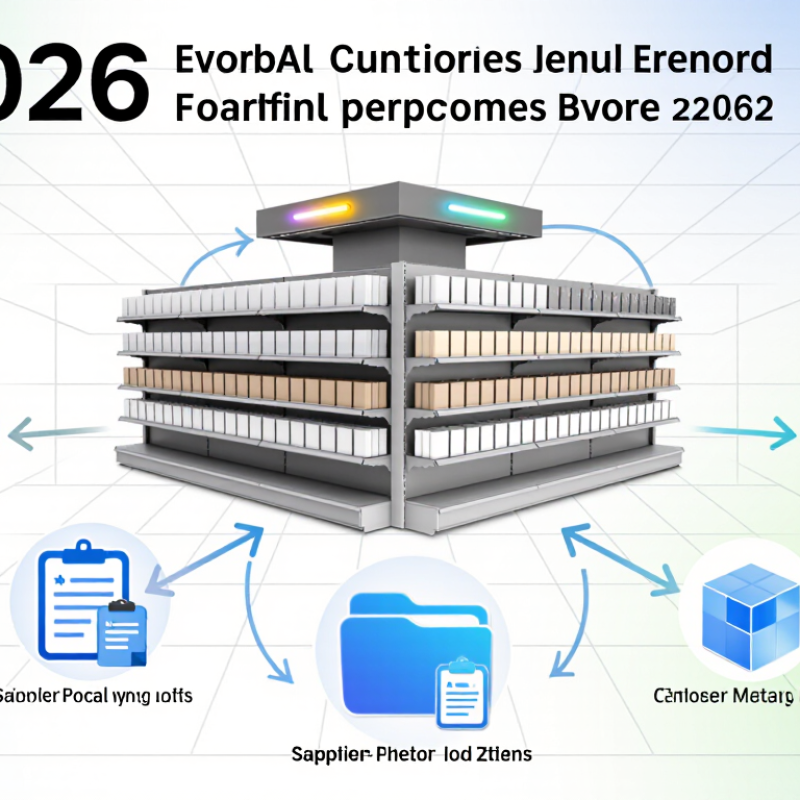
How to Choose Endcap Displays for Global Buyers in 2026?
Define Endcap Display Types and Their Global Retail Roles
Endcap displays turn aisle ends into high-visibility selling zones. Their role changes by format, shopper mission, and market.
A promotional endcap supports seasonal offers and price-led campaigns. A category endcap groups related products for faster comparison. A new-product endcap creates trial through clear messaging and sample-sized packs. Modular endcaps suit retailers that frequently change assortments. Refrigerated endcaps serve fresh, chilled, and convenience missions. In my retail audits, adjustable shelves performed better across countries than fixed layouts. Local pack sizes still affected the result.
Data supports careful planning. The 2024 PwC Voice of the Consumer Survey found that 46% of consumers purchase food online at least monthly. Physical endcaps must therefore offer discovery, speed, or immediate availability. NIQ’s 2024 State of the Retail Market report also highlights continued private-label growth in many markets. Buyers should reserve endcap space for value communication, not only premium storytelling. That distinction is easy to miss.
Tips: Match each display type to one retail role. Keep the top message readable from three meters. Test aisle lighting, shelf height, and cart movement locally. Do not assume one global layout will work everywhere. Measure uplift, out-of-stocks, shopper dwell time, and installation damage. Review weak results honestly; the display may be attractive but operationally wrong.
How to Choose Endcap Displays for Global Buyers in 2026?
Endcap displays must match the climate before they match the campaign. In humid regions, sealed plywood, coated metal, and corrosion-resistant fasteners reduce swelling and rust. Hot stores need finishes that resist softening, fading, and adhesive failure near glass entrances. Cold warehouses create another risk. Rapid temperature changes can loosen joints and crack brittle plastics. Local climate data should guide material testing, not just purchasing preferences. In my retail projects, small moisture gaps caused larger assembly problems after transport. That lesson still matters.
Shipping conditions can change a strong display into a damaged one. Use reinforced corners, moisture barriers, and shock-resistant internal supports for long international routes. Flat-packed components often reduce freight volume, but only when workers can assemble them without forcing parts. Store conditions deserve equal attention. Uneven floors, narrow aisles, frequent cleaning, and heavy customer traffic all affect stability. Specify adjustable feet, sealed edges, and replaceable high-contact panels. Keep instructions clear.
Simple details help.
A practical review should include climate exposure, container vibration, warehouse storage, and final installation. Test samples under heat, humidity, and repeated assembly cycles. Do not rely only on a supplier’s material sheet. It may not reflect real loading or rushed store work. I would also question glossy finishes in bright stores; they can create glare and hide product information. Some choices will remain imperfect. A lighter display ships efficiently, yet may need extra ballast in busy locations. That tradeoff should be recorded before production, not discovered during rollout.
Match display materials to climate, shipping, and store conditions
The planning index compares common endcap materials from 0 to 100 across four real-world conditions. Higher scores indicate stronger suitability based on moisture resistance, impact protection, dimensional stability, cleanability, and expected handling demands. Use local fire, safety, and load requirements before final specification.
When selecting an endcap display for global retail use, start with exact measurements. Record the aisle width, shelf height, base depth, and available clearance. A display that fits one market may block traffic in another. Leave space for restocking and safe customer movement. Small details matter.
Capacity should match product weight, packaging size, and expected sales volume. Use reinforced shelves for heavier items, and test the unit when fully loaded. I have seen displays fail because their stated capacity ignored uneven weight distribution. That mistake is expensive. Adjustable shelves can support different product ranges, but excessive flexibility may reduce stability. Check the locking points carefully.
Branding should be visible without overwhelming the product. Use clear colors, readable type, and messaging that remains understandable across languages. Regional teams should review translations and cultural references before production. Product visibility also depends on shelf angle, lighting, and customer eye level. Keep priority items between waist and eye height. Avoid deep shelves that hide smaller packages. A useful trial is a three-day store test with real shoppers and normal replenishment. Measure views, product handling, and restocking time. The result may challenge the original design. That is valuable. Safety labels, materials, and installation methods should meet the destination market’s current requirements. Suppliers must provide reliable load data and production samples, not only attractive renderings.
Comparison framework for selecting endcap displays across different store formats. Dimensions are shown in millimetres; capacity is based on typical 400 mm shelf pitch and should be validated against the actual product carton size, load rating, and local store requirements.
| Endcap Format | Recommended Footprint (W × D) |
Overall Height | Shelf Levels | Approx. Shelf Capacity | Product-Facing Potential | Branding Area | Visibility Profile | Best Use Case |
|---|---|---|---|---|---|---|---|---|
|
Compact Single-Sided Endcap Space Efficient |
600 × 400 Suitable for narrow aisles and smaller sales floors |
1,500–1,800 | 3–4 Adjustable shelves recommended |
12–24 shelf positions Depends on product width and depth |
Approximately 3–6 facings per shelf for products around 100–150 mm wide | Top header panel, approximately 500–600 mm wide | ★★★★☆ Strong front-facing visibility |
Trial launches, small packaged goods, seasonal promotions |
|
Standard Retail Endcap Balanced Choice |
900 × 500 Common planning size for general retail environments |
1,800–2,100 | 4–5 One adjustable shelf recommended |
20–40 shelf positions Varies with SKU mix |
Approximately 5–9 facings per shelf for products around 100–150 mm wide | Header panel plus optional side graphics; approximately 700–900 mm visible width | ★★★★★ High visibility from main traffic paths |
Everyday packaged products and high-volume promotional displays |
|
Wide Dual-Sided Endcap High Capacity |
1,200 × 600 Requires more floor clearance and stable positioning |
1,800–2,200 | 4–5 per side | 40–80 shelf positions Combined front and rear capacity |
Approximately 7–12 facings per shelf per side for products around 100–150 mm wide | Large top header, side panels, and optional rear graphic zone | ★★★★☆ Visible from multiple approach directions |
Large promotions, mixed product families, bulkier packaged goods |
|
Wire or Mesh Endcap Lightweight & Flexible |
600–900 × 350–500 | 1,500–2,000 | 3–5 | 15–45 shelf positions Dependent on basket, hook, or shelf accessories |
Flexible arrangement for hanging, boxed, or bagged products | Header card, clip-on sign, and limited side-panel graphics | ★★★★☆ Open construction improves sightlines |
Accessories, small hardware, convenience items, and lightweight products |
|
Pallet-Base Promotional Endcap High Throughput |
1,000–1,200 × 800–1,200 | 1,200–1,800 | 1–3 Often uses a base deck instead of multiple shelves |
1–4 load layers Capacity is primarily determined by carton and pallet dimensions |
Large front-facing volume; suitable for products sold in multipacks or cartons | Oversized header, floor skirt, pallet wrap, and front-facing graphics | ★★★★★ Strong visual impact at a distance |
Short-term campaigns, bulk products, seasonal and high-turnover goods |
|
Interactive or Digital Endcap Engagement Focused |
900–1,200 × 500–700 | 1,800–2,200 | 3–5 | 18–50 shelf positions Allow space for wiring and device protection |
Reduced product area if a screen, scanner, or demonstration zone is installed | Header, back panel, screen surround, and coordinated shelf-edge messaging | ★★★★★ Combines physical display with digital attention |
Product education, demonstrations, premium launches, and guided purchasing |
How to Choose Endcap Displays for Global Buyers in 2026?
Global endcap displays should be selected by region, not by appearance alone. An attractive unit can still fail local inspection or confuse shoppers. Check current standards for structural stability, material safety, fire performance, electrical parts, and accessibility. Requirements may cover anchoring, load limits, sharp edges, and aisle clearance. Ask suppliers for recent test reports, installation drawings, and material declarations. Verify documents with qualified local reviewers before production. Standards change. Old paperwork creates avoidable risk.
Localization also affects daily performance. Measurements should match local store layouts and transport limits. Text, symbols, prices, and product instructions need regional review. A display designed for one language may look crowded after translation. Consider climate, lighting, shopper height, and cleaning routines. I have seen strong concepts weakened by small details, such as unreadable warnings or unsuitable wheels. A perfect global template is unrealistic. Design a stable core, then adapt visible and technical elements locally.
Tips: Build a regional compliance checklist before requesting quotations. Confirm who approves the final design and who installs it. Test a sample in a real store aisle, not only in a studio. Record every change, including fasteners, coatings, and graphics. If a requirement seems unclear, pause and ask a certified professional. That small delay may prevent costly rework.
For global buyers, an endcap display is not just a retail fixture. It must survive container handling, store assembly, and repeated customer contact. Ask suppliers for drawings, material specifications, load tests, and recent production photos. Do not trust photographs. Request one assembled unit, not only a catalog image. Check shelf deflection with the actual product weight. Small details matter. Confirm carton dimensions, pallet quantity, and corner protection. These figures can affect freight more than many buyers expect.
Compare total landed cost, not unit price alone. Include tooling, sample fees, packaging, ocean or air freight, duties, installation labor, and replacement parts. A cheaper frame may require custom packing or frequent repairs. Request tiered quotations at realistic volumes. Also ask how prices change with steel, board, or recycled plastic inputs. Suppliers should state payment terms and quotation validity. This is where procurement judgment becomes important. The lowest price can be misleading.
Lead time should be measured from approved artwork to delivered stock. Clarify production capacity during seasonal peaks, inspection timing, and remedies for defects. For multi-country programs, test local assembly instructions and replacement panels. Reusable displays deserve a separate calculation. Strong fasteners, replaceable graphics, and flat-pack shipping can reduce waste and future spending. However, reuse is not automatic. I once overvalued a durable frame that was too heavy for smaller stores. Measure labor and storage space before calling it sustainable. Keep one pilot in a real store for four weeks. Its scratches, missing screws, and slow setup may reveal more than a supplier presentation.
Humid regions need sealed plywood, coated metal, and corrosion-resistant fasteners. Hot stores require finishes that resist fading, softening, and adhesive failure. Cold warehouses can loosen joints and crack brittle plastics. Test materials locally. Simple details help.
Use reinforced corners, moisture barriers, and shock-resistant internal supports. Flat-packed parts can reduce freight volume. They must assemble without force. Check carton dimensions, pallet quantities, and corner protection before production.
Uneven floors, narrow aisles, cleaning routines, and heavy traffic can create safety problems. Adjustable feet improve stability. Sealed edges resist cleaning moisture. Replaceable panels help in high-contact areas. Test it loaded.
Measure aisle width, shelf height, base depth, and clearance. Leave room for restocking and customer movement. Test shelves with actual product weight. Uneven loading can cause failure, even below the stated capacity.
Keep priority products between waist and eye height. Avoid deep shelves that hide smaller packages. Review shelf angles, lighting, and customer sightlines. A three-day store test may expose weak choices.
Request drawings, material specifications, load tests, and recent production photos. Ask for one fully assembled sample. Check shelf deflection with real products. Attractive renderings are not enough.
Include tooling, samples, packaging, freight, duties, installation, and replacement parts. Compare realistic order volumes. Confirm payment terms and quotation validity. A low unit price can become expensive later.
Measure lead time from approved artwork to delivered stock. Confirm peak-season capacity, inspections, and defect remedies. Reusable displays need strong fasteners, replaceable graphics, and efficient storage. Durability alone proves little. A heavy frame may fail in smaller stores.
Choosing the right Endcap Displays in 2026 requires a balance of retail strategy, practical performance, and regional adaptability. Buyers should first understand the differences among freestanding, modular, pallet-based, and promotional display formats, then select the type that best supports product placement and shopper engagement in each market. Material choices should reflect local climate, shipping conditions, store environments, durability needs, and sustainability goals. Key evaluation factors include overall size, product capacity, structural stability, brand presentation, accessibility, and clear product visibility.
Before making a final decision, global buyers should confirm that the display meets applicable regional safety, packaging, labeling, accessibility, and installation requirements. Localization may also involve language, measurements, colors, graphics, and merchandising preferences. A complete supplier comparison should consider production quality, total cost, minimum order quantities, lead times, logistics, customization options, after-sales support, and the possibility of reuse or refurbishment. A well-planned selection process can improve in-store efficiency, reduce long-term expenses, and support consistent retail execution across different markets.

DuraRacks