Choosing Modular Shelving for global projects requires more than comparing catalog prices. Buyers must evaluate storage needs, room dimensions, materials, load capacity, delivery routes, and installation conditions. A shelf that performs well in a dry showroom may struggle in a humid warehouse or a busy retail environment.
Modular Shelving offers practical flexibility. Components can be rearranged when inventory changes, reducing the need for complete replacements. In real purchasing projects, however, flexibility depends on accurate measurements and compatible connections. Small differences in panel thickness or hole spacing can create costly problems. Measure twice.
Experienced buyers usually request technical drawings, material specifications, load tests, finish samples, and clear packaging details. They also check whether the supplier has handled similar export orders. Photos are useful, but they cannot replace factory audits, sample inspections, or independent quality checks. A low initial quote may exclude hardware, duties, installation support, or damage protection during transit.
Global sourcing also requires careful attention to regional standards and local building conditions. Requirements differ by market, so buyers should confirm them with qualified local professionals. Supplier communication matters just as much. Ask how replacement parts are supplied, how warranties are managed, and who supports installation after delivery.
There is no universal best system. The right choice depends on use, budget, climate, design preferences, and future expansion plans. Even experienced teams can overlook small details. A careful comparison can expose those gaps before production begins and help buyers choose Modular Shelving that remains reliable beyond the first shipment.
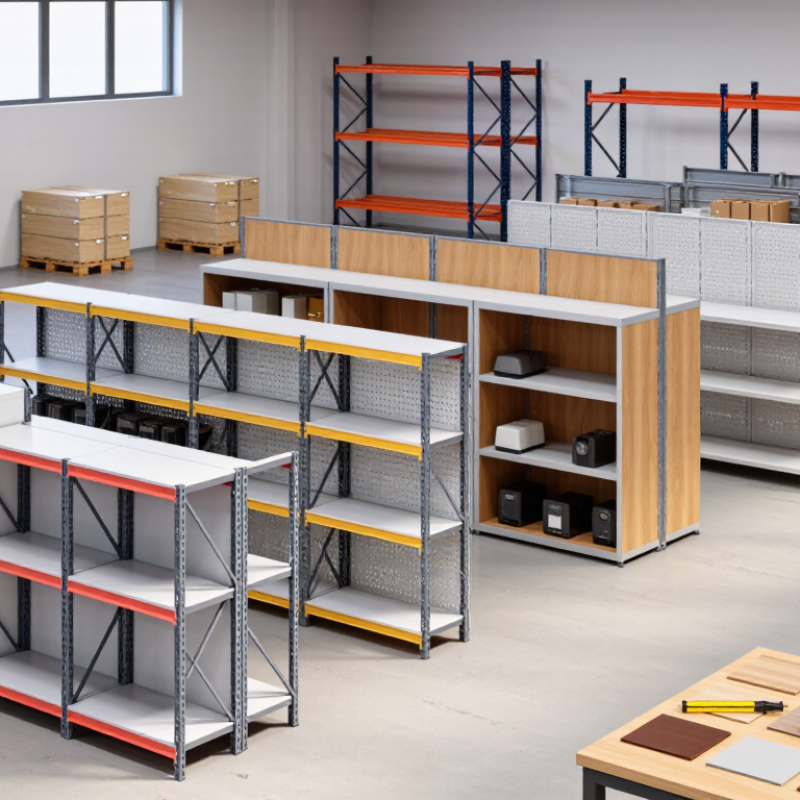
A reliable choice starts with the inventory, not the shelf image. Record product weight, package size, turnover rate, and access frequency. A carton of spare parts needs different support from folded clothing. Measure ceiling height, door width, aisle clearance, and floor condition. Leave room for workers to move safely. Small details matter.
In warehouse projects, I check the heaviest stored load first. Then I compare shelf depth with the actual package footprint. Adjustable levels help when product sizes change, but excessive flexibility can reduce stability. Ask for load tests, material specifications, assembly instructions, and corrosion information. These documents make supplier comparisons more objective. They also expose vague claims.
Global buyers should define delivery terms, local installation skills, replacement-part access, and expected service life. Humid regions may need suitable surface protection. Narrow elevators can reject a perfect design. A modular system that arrives flat-packed may reduce freight volume, yet assembly time can increase. That trade-off is easy to underestimate. I once focused too heavily on unit price and overlooked labor costs. The cheaper option was not cheaper in practice. Recheck measurements with photographs and a simple floor plan. Requirements change.
Design matters as much as material. Adjustable beams support changing carton sizes and reduce wasted vertical space. Boltless systems install quickly, but connections still need regular inspection. MHI’s 2024 Annual Industry Report found that 55% of respondents planned to increase technology investment. This supports flexible storage, especially when inventory changes quickly. Do not trust appearance alone. A thick frame can still have weak joints.
Load ratings require careful reading. Check whether the stated capacity applies per shelf, per bay, or to evenly distributed weight. Ask for test methods, safety factors, and deflection limits. ANSI/RMI MH16.1 and EN 15635 provide useful reference points for steel storage safety and inspection. Local building rules may still differ. That detail is easy to miss.
Tips: Measure the heaviest item, not the average one. Leave clearance for forklifts and sprinklers. Request corrosion data for coastal sites. Label every shelf with its tested capacity. Recheck anchors after installation. I have seen buyers select maximum capacity, then discover poor floor loading or unstable placement. More capacity is not always better.
Global buyers should inspect assembly before comparing finishes or prices. A shelf may use bolts, clips, rivets, or threaded connectors. Each method changes installation time, stability, and repair options. In warehouse tests, I check whether one person can align the frame without forcing the joints. Clear instructions, labeled parts, and common tools reduce costly mistakes. Tool-free assembly sounds attractive. It can still hide loose connections. Ask for documented load ratings, test conditions, and tolerances. A rating without shelf spacing is incomplete. Different users may install shelves 300 or 600 millimeters apart. The same frame may perform differently. Metric dimensions also need careful confirmation. Small measurement errors create large ordering problems.
Adjustability should match actual inventory, not an imagined future. Look for regular hole spacing, secure locking pins, and shelves that remain level after relocation. Test a loaded unit if possible. Place cartons, binders, or containers on each tier and observe deflection. A slight bend may be acceptable; repeated bending is a warning. Long-term durability depends on steel thickness, coating quality, joint design, and floor conditions. Humid storage rooms need corrosion-resistant finishes and drainage-friendly feet. Moving shelves across concrete can loosen fasteners over time. Keep spare connectors available. This is often overlooked. Ask about replacement parts, inspection guidance, and warranty terms in writing. I would not trust a polished sample alone. Production batches can vary, and my own checks have sometimes found scratches or uneven holes. Independent pre-shipment inspection remains useful, even for modest orders.
Evaluate Assembly Methods, Adjustability, and Long-Term Durability
| Shelving System | Typical Assembly Method | Tools & Installation Time | Shelf Adjustability | Typical Load per Shelf | Corrosion Protection | Expected Service Life* | Best Global-Buyer Use Case | Key Buying Check |
|---|---|---|---|---|---|---|---|---|
| Boltless Rivet Steel | Riveted beams slot into upright frames; shelves rest on horizontal supports. | Rubber mallet recommended; approximately 30–60 minutes for a standard unit. | Usually adjustable in 25–50 mm vertical increments. | Approximately 150–500 kg, depending on span, beam profile, and load distribution. | Powder-coated or galvanized steel options are common. | 10–20 years in dry indoor environments with correct loading. | Warehouses, workshops, archives, and high-capacity storage. | Confirm frame bracing, beam-to-upright locking, and tested load ratings. |
| Clip-In Steel | Clips or locking tabs connect shelves to perforated uprights. | Generally tool-free; approximately 20–45 minutes for a standard unit. | Commonly adjustable in 25 mm increments; shelves can be repositioned quickly. | Approximately 75–300 kg, depending on shelf depth, reinforcement, and span. | Powder coating for indoor use; galvanized finishes for higher humidity. | 8–15 years in normal indoor service. | Retail back rooms, offices, storerooms, and frequently reconfigured spaces. | Inspect clip engagement, anti-lift features, and replacement-part availability. |
| Slotted Angle Steel | Perforated angles are joined with bolts, nuts, and corner plates. | Wrench or socket set required; approximately 1–3 hours for a standard unit. | Highly flexible; holes commonly allow adjustments of about 25–50 mm. | Approximately 50–250 kg, depending on angle thickness, bracing, and shelf material. | Painted, powder-coated, or galvanized finishes are available. | 8–15 years indoors; shorter if exposed to moisture without adequate coating. | Budget-conscious projects, custom dimensions, and irregular layouts. | Check bolt grade, diagonal bracing, edge safety, and corrosion resistance. |
| Wire Shelving | Tapered plastic or metal sleeves lock wire shelves onto round posts. | Usually tool-free; approximately 15–30 minutes for a standard unit. | Typically adjustable in 25 mm increments. | Approximately 100–350 kg, depending on shelf size and post diameter. | Chrome, epoxy-coated, or stainless-steel finishes; stainless steel suits wet areas. | 5–15 years, depending on finish, humidity, chemicals, and cleaning practice. | Kitchens, laboratories, healthcare storage, and areas requiring airflow. | Verify wire diameter, shelf deflection, finish thickness, and hygienic cleaning requirements. |
| Aluminum T-Slot | Extruded profiles connect with T-nuts, brackets, and fasteners. | Hex keys and basic hand tools; approximately 1–2 hours for a standard unit. | Very high; components can be repositioned along continuous slots. | Approximately 50–250 kg, depending on profile size, span, and joint design. | Naturally corrosion-resistant; anodized surfaces provide additional protection. | 15–25 years in many indoor and moderate-humidity applications. | Cleanrooms, production lines, offices, and lightweight modular workstations. | Confirm profile wall thickness, joint strength, galvanic compatibility, and spare connectors. |
| Stainless-Steel Modular | Bolted, welded-module, or adjustable-post construction. | Basic tools commonly required; approximately 45–120 minutes for a standard unit. | Usually adjustable in 25–50 mm increments, depending on the post system. | Approximately 100–400 kg, depending on grade, shelf thickness, and span. | Stainless steel offers strong resistance to moisture; chloride exposure still requires careful grade selection. | 15–30 years when cleaned correctly and used within the specified environment. | Food service, marine-influenced locations, laboratories, and wash-down areas. | Confirm steel grade, weld quality, passivation, cleaning compatibility, and drainage design. |
Global Purchasing Notes
Load figures and service-life estimates are typical industry ranges rather than universal guarantees. Actual performance depends on shelf span, evenly distributed loading, installation quality, ambient humidity, chemical exposure, maintenance, and compliance with the supplier’s tested specifications. For international projects, also confirm packaging dimensions, replacement components, installation instructions, corrosion-test documentation, and applicable local safety requirements.
How to Choose Modular Shelving for Global Buyers?
For global buyers, modular shelving should meet recognized international safety and load standards. Check material strength, corrosion resistance, edge safety, and maximum shelf capacity. Ask for test reports, installation instructions, and clear product dimensions. A 900-millimeter shelf may fit one warehouse but fail in another layout. Small differences matter.
Packaging needs equal attention. Each panel should have protective corners, moisture-resistant wrapping, and labels showing quantity and orientation. Export cartons should survive stacking, vibration, and sudden temperature changes. Confirm carton size and gross weight before shipping. These details affect freight costs and unloading equipment. However, packaging is not always perfect. Request photos of packed units and inspect a sample shipment when possible.
Tips: Compare shipping terms carefully. Confirm who handles customs documents, port charges, and last-mile delivery. Use a packing list with matching carton numbers. During installation, check the floor level first. Uneven floors can make connected shelves unstable. Keep fasteners separated and labeled; this saves time on site. Leave safe clearance around walkways and emergency equipment. A local installer may understand building conditions better, but written instructions still matter. Do not rely on assumptions. One missed bolt or unclear diagram can delay an entire project.
How to Choose Modular Shelving for Global Buyers?
Supplier assessment should begin with evidence, not attractive samples. The World Bank’s 2023 Logistics Performance Index compares 139 economies using customs, infrastructure, and delivery reliability. Ask suppliers for factory audits, material certificates, load tests, and recent export references. Check whether steel thickness, coating, and packing standards remain consistent across batches. One perfect sample proves little.
Cost is more than the unit price. UNCTAD’s Review of Maritime Transport 2023 states that ships carry over 80% of global merchandise trade by volume. Freight delays, port charges, duties, insurance, and replacement parts can change the final figure sharply. Request a landed-cost worksheet with currency, delivery terms, pallet dimensions, and minimum order quantities. Low quotes sometimes hide expensive packaging.
Customization should be measurable. Specify bay width, shelf load, color code, hole spacing, carton limits, and installation drawings. A practical supplier can provide prototypes before mass production. After-sales support needs equal attention. Define response times, spare-part availability, damage claims, and remote installation guidance in writing. The International Organization for Standardization’s ISO 9001 framework emphasizes controlled processes and customer feedback, but certification alone cannot guarantee service. I would still test one shipment first. A rushed decision may look efficient, yet it can create years of maintenance work.
Recommended supplier evaluation weights for international modular shelving purchases. The scoring model prioritizes total landed cost, product quality, customization flexibility, delivery reliability, and after-sales support.
Use these weights as a practical starting point, then adjust them according to project size, import requirements, installation complexity, and expected service life.
Record product weight, package size, turnover rate, and access frequency. Measure ceiling height, doors, aisles, floors, and worker pathways. Measure twice.
Coated steel suits general storage. Stainless steel handles humid environments better. Aluminum is lighter but may flex under concentrated loads. Wire shelves improve airflow and visibility.
Ask whether capacity applies per shelf or per complete unit. Request test methods, safety factors, spacing limits, and deflection information. Label each shelf clearly.
Excess depth wastes space and may reduce access. Compare shelf dimensions with cartons, binders, or containers. The largest item matters most.
Check bolts, clips, rivets, or threaded connectors. Look for labeled parts, clear instructions, and common tools. Test whether one person can align the frame safely.
Adjustable levels help when product sizes change. Too much flexibility can reduce stability. Choose regular hole spacing and secure locking pins.
Review steel thickness, coating quality, joint design, floor conditions, and replacement-part access. Humid rooms need corrosion-resistant finishes. Keep spare connectors available.
Compare freight volume, assembly labor, installation skills, and future repairs. Flat-packed units may lower shipping costs but increase assembly time. Cheap is not always cheaper.
Independent inspection can reveal scratches, uneven holes, or inconsistent production. A polished sample may not represent every batch. My earlier checks were not always enough.
Choosing Modular Shelving for global buyers starts with a clear understanding of storage needs, available space, product dimensions, weight requirements, and local purchasing expectations. Buyers should compare materials such as steel, aluminum, and engineered board, while reviewing design flexibility, load capacity, corrosion resistance, and suitability for different environments. A well-matched system should provide efficient organization without exceeding floor, ceiling, or access limitations.
Assembly methods, adjustability, and long-term durability are also essential considerations. Buyers should confirm whether the shelving can be installed easily, reconfigured as needs change, and maintained with readily available parts. For international purchasing, it is important to check relevant safety and quality standards, protective packaging, shipping dimensions, installation instructions, and customs documentation. Finally, evaluate suppliers based on transparent pricing, customization capabilities, production consistency, delivery reliability, warranty terms, and after-sales support. A careful comparison helps buyers select Modular Shelving that offers practical performance, manageable logistics, and dependable value over time.

DuraRacks