Mobile Shelving is a storage system built on movable carriages rather than fixed, separate aisles. Its shelves travel along floor-mounted rails, allowing several units to close together. When access is needed, the operator opens one aisle. The result is simple: more usable storage in the same room.
Picture a records room with six fixed aisles. Mobile Shelving may reduce those unused gaps to one active passage. That space can hold more files, archive boxes, medical supplies, or inventory. It can also protect items from unnecessary exposure. However, higher density does not automatically mean better storage. Poor planning can create slow access, awkward lifting, or unsafe movement.
Material-handling consultant Michael J. Gruenberg captures the practical priority: “Storage capacity matters only when people can retrieve items safely and efficiently.” His observation reflects an important E-E-A-T principle. A reliable design must consider item weight, shelf height, user traffic, floor strength, fire protection, and future growth. Manual systems may suit lighter collections, while powered systems can support heavier loads and controlled movement.
It is not always the perfect answer. Be honest about that. Mobile Shelving can cost more initially and may require staff training. A crowded layout can also make retrieval frustrating. The right choice depends on workflow, not appearance alone. This guide explains how Mobile Shelving works, where it performs well, and which design details deserve closer review before installation.
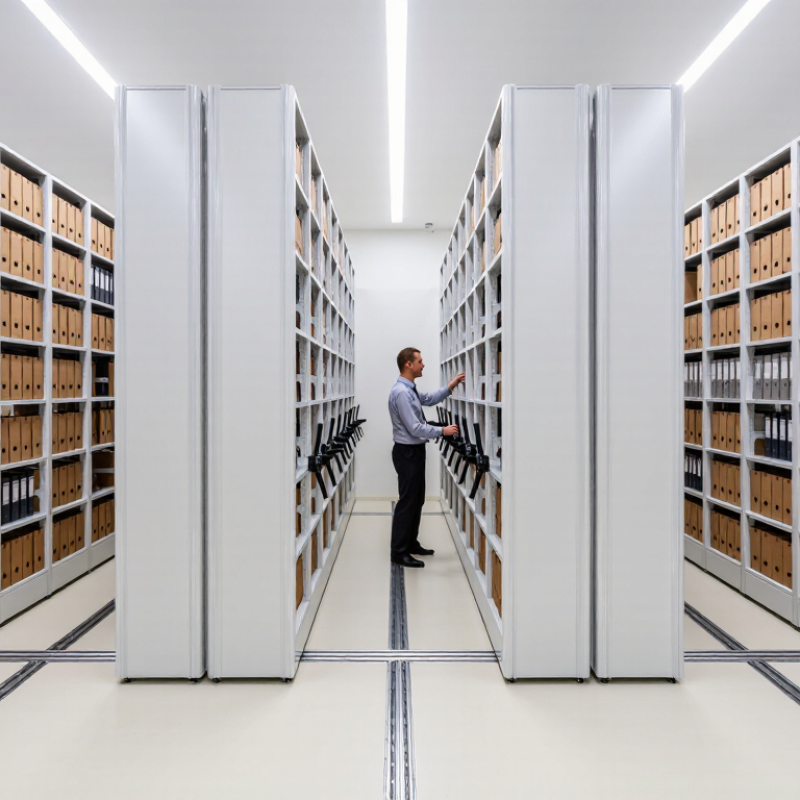
What Is Mobile Shelving and How Does It Work?
Definition and Purpose of Mobile Shelving
Mobile shelving is a storage system mounted on wheeled bases. These bases move along fixed floor tracks. Unlike ordinary shelving, the units do not need permanent aisles between every row. Staff open one aisle only where access is needed.
The purpose is simple: store more items without expanding the room. In a records area, shelves may hold folders, archive boxes, manuals, or equipment parts. When a user turns a hand wheel or presses a control, the selected rows move apart. This creates a temporary working aisle. Other rows remain closely positioned, using less floor space.
From my experience reviewing storage layouts, the best results depend on accurate planning. Shelf depth, load weight, ceiling height, and walking space all matter. A compact design can increase capacity, but it may slow access when several people need different aisles. That trade-off is easy to overlook.
Safety also shapes the system’s purpose. Floor tracks must stay clear of loose objects. Moving sections should include suitable stopping controls and protective features. Staff need practical training, not just written instructions. Mobile shelving is efficient, but it is not effortless. Poor labeling can waste the saved space, and overloaded shelves may affect smooth movement. A careful layout remains more valuable than maximum capacity alone.
A mobile shelving system places storage units on movable carriages instead of fixed rows. Its main components work together to create compact, accessible storage. Steel rails are installed into or onto the floor, guiding each carriage along a controlled path. The carriages support the shelving frames and distribute heavy loads evenly. Adjustable shelves then hold files, tools, supplies, or boxed materials at different heights.
A drive mechanism moves the carriages when an operator turns a handle or uses a powered control. Manual systems suit smaller rooms and lighter loads. Powered systems help users move longer rows with less physical effort. End panels, guides, brakes, and protective covers improve stability during operation. Safety sensors can stop movement when a person or object enters a closing aisle. Clear load ratings matter. Overloading one shelf can affect the entire carriage.
The floor is easy to overlook. It must be level, strong, and accurately measured before installation. A common planning mistake is leaving too little space for handles, doors, or wheelchair access. I would recheck those details before ordering anything. Shelving dimensions should match the stored items, not only the available wall length. A narrow aisle may save space, but it can reduce comfort and slow daily retrieval. Good systems balance capacity, movement, visibility, and safe access.
Mobile shelving is a storage system that moves along floor-mounted rails. It creates one shared aisle instead of leaving permanent gaps between every unit. This design can increase storage capacity in offices, archives, libraries, and stockrooms.
How mobile shelving operates step by step starts with a control switch or hand wheel. The operator selects the required row. An electric motor, or manual gear, moves the shelving slowly along its rail. Guide wheels keep each unit aligned. Safety sensors stop movement when they detect an obstruction. Once the selected aisle opens, staff can retrieve or place items. The system then closes the aisle after people leave. Movement should always remain controlled.
Tips: Keep heavy boxes on lower shelves. Store lighter items above them. Label each aisle clearly. Leave no loose objects on the rails. Test emergency stops regularly. A trained technician should inspect motors, brakes, sensors, and rail alignment.
In daily use, mobile shelving feels simple, but planning affects its reliability. The floor must be level and strong enough for the loaded units. Staff also need clear operating instructions, especially during busy periods. A crowded aisle can create delays and unsafe choices. The process is not flawless. Dust, uneven loading, or neglected inspections may cause resistance during movement. Routine checks often reveal small problems before they become expensive repairs. Experienced storage managers record unusual sounds, slow travel, and sensor interruptions instead of ignoring them.
Mobile shelving places storage units on floor rails. Each unit moves sideways with a hand wheel or motor. This design removes fixed aisles between every shelf. Staff open one access aisle only when needed. The system suits archives, libraries, warehouses, healthcare records, and parts rooms. It also helps facilities with expensive or limited floor space.
The main benefit is higher storage density. Depending on aisle design, mobile shelving can often create 30% to 50% more usable capacity than fixed shelving. Actual results depend on load size, safety clearance, and retrieval habits. The 2024 MHI Annual Industry Report found that 55% of supply-chain respondents expected to adopt inventory and network optimization within five years. Mobile shelving supports that goal through clearer location control and shorter walking routes. Yet it is not a perfect fix. Slow-moving shelves may create delays during busy periods. Mechanical components also need inspection.
Tips
Measure the largest stored item first. Leave room for ventilation and maintenance access. Use labels that remain visible when shelves move. Group frequently accessed materials near the most convenient aisle. Record retrieval times before and after installation. This simple comparison can reveal whether density gains actually improve daily work. Teams often overlook this detail.
What Is Mobile Shelving and How Does It Work?
Mobile shelving uses carriages that move along floor rails. Turning a handwheel or pressing a control opens one aisle. Closed rows save floor area, but movement creates pinch points. Planning should begin with load weight, shelf dimensions, floor capacity, and user traffic. The U.S. Bureau of Labor Statistics recorded 885 fatal work injuries from falls, slips, and trips in 2023. That figure is not shelving-specific, yet it shows why clear access matters.
Install physical stops, end barriers, emergency-release controls, and visible aisle indicators. Keep rails level and free from dust, straps, and dropped stock. Test interlocks and emergency stops on a documented schedule. HSE guidance in HSG76 recommends regular storage-equipment checks and detailed inspections by a competent person. Never exceed rated bay loads. A bent upright is not cosmetic. It may signal hidden damage. Workers also need task-specific training, including manual handling and evacuation routes. A rushed layout can look efficient on paper and fail during a busy shift.
Tips: Mark a safe standing zone beside each moving carriage. Store heavier cartons between knee and shoulder height. Leave turning space for carts and mobility devices. Photograph damage before repairs. Review near misses, not only injuries. This is where practice gets uncomfortable. Monthly reviews may help, but usage, local risks, and supplier instructions should set the interval.
Mobile shelving uses shelving units mounted on floor tracks. The units move together to create access aisles only where needed, improving space efficiency while requiring careful safety planning and regular maintenance.
The chart shows key accessibility reference dimensions from the 2010 ADA Standards. These dimensions should be considered when planning access around mobile shelving; final aisle widths, clearances, fire protection, and operating controls must also comply with applicable local codes and the shelving manufacturer’s specifications.
Mobile shelving consists of storage units that move along floor-mounted rails. It creates one shared aisle instead of permanent gaps. The system suits offices, archives, libraries, and stockrooms.
An operator selects a row using a control switch or hand wheel. A motor or manual gear moves the unit slowly. Guide wheels keep it aligned. Safety sensors stop movement when they detect an obstruction.
It can sometimes provide 30% to 50% more usable capacity than fixed shelving. Results depend on item sizes, clearances, and retrieval habits. Measure actual storage needs before trusting estimates.
Place heavy boxes on lower shelves. Store lighter materials above them. This reduces instability and makes handling easier. Do not exceed the rated load for any shelf.
Useful features include emergency stops, physical end barriers, aisle indicators, and obstruction sensors. Mark a safe standing zone beside each moving carriage. Keep people clear while the shelves travel.
Keep rails level and free from dust, straps, and loose stock. Inspect motors, brakes, sensors, and wheel alignment regularly. Even a small dropped object can cause resistance.
Confirm that the floor is level and strong enough for fully loaded units. Measure the largest stored item. Leave space for ventilation, repairs, carts, and mobility devices.
Yes. A closed aisle may slow retrieval during busy periods. Frequently used materials should stay near convenient access points. The system is helpful, but not flawless.
Label every aisle clearly and follow written instructions. Record unusual sounds, slow movement, and repeated sensor stops. These details may expose problems before expensive repairs begin.
Inspection intervals should reflect usage, local risks, and supplier instructions. Test emergency stops on a documented schedule. Review near misses, not only injuries. Monthly checks may still miss developing problems.
Mobile Shelving is a storage solution designed to maximize available floor space by placing shelving units on movable bases. Instead of leaving fixed aisles between every row, the units can be moved closer together and opened only where access is needed. A typical system includes shelves or cabinets, mobile carriages, rails or tracks, drive mechanisms, and operating controls. These components work together to support organized, high-density storage while maintaining practical access to stored items.
To operate the system, a user selects the desired aisle, activates the control, and the mobile bases move along their tracks until the aisle is positioned for safe entry. Mobile Shelving is useful in offices, archives, libraries, warehouses, and other spaces where capacity and organization are important. Effective planning should consider room dimensions, load requirements, user access, lighting, ventilation, and emergency routes. Regular inspections, cleaning, and maintenance of tracks, controls, and moving parts help preserve reliable performance and safe operation.

DuraRacks